

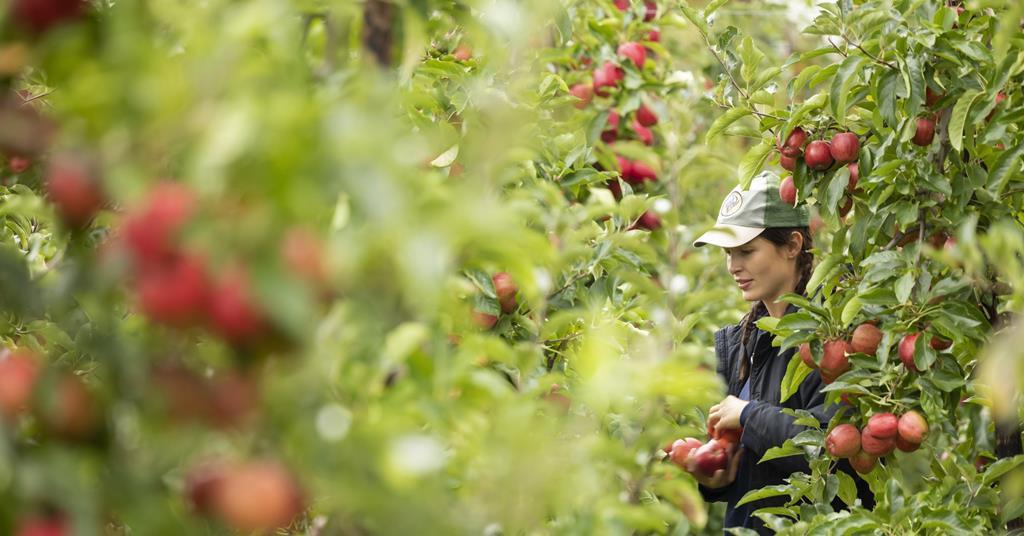
An orchard specialist would usually make the following point at the outset: it is easier to prevent problems than to correct them later. A tree planted too deep, placed in the wrong soil, or left to grow without a clear structure may survive, but it rarely performs as well as it should. This matters whether someone is planting a single apple tree in a suburban garden, starting a small mixed orchard, or trying to make better use of a rural plot.
The fruit trees specialists at https://www.fruit-trees.com/ nursery note that many first-time buyers focus heavily on the fruit itself and too little on the growing conditions. Their advice is to match the tree to the site, understand the rootstock, and only then decide what to buy fruit trees from a practical rather than purely sentimental point of view. That approach tends to save time, money and disappointment.
The seven mistakes below appear repeatedly among beginners across the UK. Some are linked to planning, others to aftercare, but all have one thing in common: they can be avoided with a more measured approach. For growers who want healthier trees, steadier crops and less remedial work, these are the habits worth changing from the start.
Mistake 1: Choosing the wrong site because it looks convenient
The most common beginner’s error is choosing a planting spot based on ease rather than suitability. A patch close to the fence, a spare corner near the shed, or an open-looking area in the lawn can appear ideal until the tree begins to struggle. Fruit trees are less forgiving than many ornamental plants. Light, airflow, drainage and frost exposure all matter, and the wrong site can reduce growth before a tree has had a fair chance.
In the UK, light levels are often the first limitation. Apples, pears, plums and cherries all need good sunlight to build strength, ripen wood and develop usable crops. A tree that receives only partial light may remain alive but produce thin growth, fewer flowers and poor-quality fruit. New growers sometimes underestimate how much shade a house, hedge or neighbouring tree creates over the course of a full season. What seems bright in spring may be shaded for much of summer.
Poor drainage is another regular problem. Fruit trees dislike sitting in cold, waterlogged ground, particularly in winter. Heavy clay is not impossible, but it needs thoughtful preparation and the right rootstock. A site that holds standing water after rain is a warning sign, not a challenge to ignore. Roots need oxygen as much as moisture, and suffocated roots lead to weak growth, disease susceptibility and early decline.
Exposure is equally important. A site open to strong prevailing winds can damage blossom, rock young trees loose and slow establishment. Frost pockets are another hidden issue, especially in low-lying areas where cold air settles. A variety that flowers early may look healthy every year yet still fail to crop if blossom is routinely caught by late frost.
A sensible site assessment should include sunlight, soil type, drainage, wind exposure and the space a mature tree will need. This last point is often overlooked. A tree may look small on the day it is planted, but its future spread affects nearby paths, borders, sheds and neighbouring plants. Good placement is not about making a tree fit into an empty gap. It is about finding a place where the tree can develop without constant correction.
Mistake 2: Picking the variety first and the rootstock second
Beginners often shop by fruit description alone. They choose an apple because it is sweet, sharp, traditional or familiar from childhood, then discover too late that the tree is unsuitable for their conditions. This happens because the variety gets most of the attention, while rootstock, vigour and pollination requirements are treated as minor details. In practice, those details often determine whether a tree is manageable and productive.
Rootstock controls the tree’s size, growth rate, anchorage and, to some extent, how quickly it begins fruiting. An apple on a vigorous rootstock may eventually be far too large for a small garden, while one on a dwarfing rootstock may need permanent support and careful watering. New growers who ignore this can end up with either an oversized tree that dominates the plot or a weak tree that never settles properly. The right rootstock should reflect soil, space and how much maintenance the grower can realistically manage.
The same principle applies to disease resistance and local suitability. In many parts of Britain, damp conditions create pressure from apple scab, canker and mildew. A variety that performs well in one region may prove troublesome in another. Specialist advice is often valuable here, particularly when choosing for western or northern conditions where rainfall and lower summer heat change the balance.
Pollination is another point beginners regularly miss. Some fruit trees are self-fertile, but many benefit from or depend on a pollination partner that flowers at the right time. A healthy-looking apple tree can grow well and still fruit poorly if its pollination group has not been considered. Crab apples can help in some settings, but not every situation is that simple. A tree should not be chosen in isolation.
The best starting question is not “Which fruit do I like most?” but “What will grow reliably here?” That shifts attention to frost risk, soil, space and maintenance capacity. Once those are clear, choosing a variety becomes easier and more sensible. It also stops growers from treating fruit trees like impulse purchases. A tree may live for decades, so the buying decision should reflect long-term fit rather than first impressions.
Mistake 3: Planting badly and assuming the tree will correct itself
Even a well-chosen tree can be set back by poor planting. Many beginners believe that once a tree is in the ground and watered, it will sort itself out. In fact, incorrect planting is one of the main reasons young fruit trees fail to establish properly. The damage may not be obvious immediately, which is why the mistake is often repeated.
Planting depth is one of the biggest issues. Trees set too deep often struggle because the graft union sits too close to the soil or below it. That can encourage the scion to root, defeating the purpose of the rootstock, while also increasing the risk of disease and weak growth. The graft union should remain clearly above soil level after planting and settling. This seems simple, but new growers frequently misjudge it, especially when the ground has been recently loosened.
Equally common is over-preparing the planting hole in the wrong way. A hole should be wide enough for the roots to spread comfortably, but not turned into a deep pit of rich compost surrounded by poorer native soil. That can encourage roots to circle within the improved pocket rather than move outward. In clay soils, a badly made hole may even act like a sump in winter. Improvement should focus on the broader soil environment and surface mulching, not creating an artificial container in the ground.
Staking also causes confusion. Some young trees need support, particularly on dwarfing rootstocks or exposed sites, but support should be proportionate and secure without restricting movement altogether. Slight movement helps a young tree strengthen. A stake that is too high, too tight or left unchecked can rub the bark, distort growth or create a tree dependent on support for too long.
Timing matters too. Bare-root trees planted during the dormant season often establish well, but only if the soil is workable and not frozen or waterlogged. Rushed planting in poor winter conditions can do more harm than a short delay. Container-grown trees offer more flexibility, yet they still need careful watering and aftercare.
Good planting is not complicated, but it does require attention. Correct depth, sensible support, proper root placement and a realistic view of soil conditions all shape the tree’s first years. A bad start can be partially repaired later, but it usually costs extra time and weaker early performance.
Mistake 4: Watering too little, watering too much, and feeding at the wrong time
Watering is one of the most misunderstood parts of fruit tree care. New growers often assume that because Britain gets regular rain, newly planted trees can mostly fend for themselves. Others react in the opposite direction and water little and often, keeping the surface damp but never helping moisture reach the deeper root zone. Both habits can limit establishment.
The first two or three growing seasons are especially important. A young tree has not yet developed a broad, resilient root system, so it depends heavily on consistent moisture while it settles. Dry spells in late spring and summer can slow root development sharply, even if the top growth still looks acceptable for a while. This is why many trees appear to “do nothing” after planting. They survive, but they do not build momentum.
The answer is not daily light watering. Occasional thorough watering is usually far better, because it encourages deeper rooting. The exact frequency depends on soil and weather, but the principle stays the same: water properly, then allow the surface to dry rather than keeping the top few centimetres permanently wet. Constant shallow watering can create weak rooting patterns and greater stress in dry periods.
Feeding is another area where enthusiasm can overtake judgement. Beginners sometimes apply too much nitrogen in the hope of speeding growth. That often produces soft, sappy shoots that are more vulnerable to pests, disease and winter damage. Fruit trees need balanced nutrition, not forced growth. In many garden soils, mulching with organic matter and monitoring tree performance is more useful than repeated feeding with high-strength products.
Mulch itself is valuable, but only when used correctly. A mulch ring helps retain moisture, moderates soil temperature and suppresses competing weeds. However, mulch should not be piled against the trunk. The so-called “mulch volcano” remains a familiar sight and is a reliable way to invite rot, vole damage and poor trunk health. The base of the tree should stay clear.
Weed competition is often underestimated as well. Grass around a newly planted fruit tree can absorb a surprising amount of water and nutrients. A clean area around the base makes a visible difference in establishment. Beginners tend to focus on watering alone when the real issue is that the tree is competing with turf every day.
Trees do not need constant interference, but they do need steady support while young. Sensible watering, restrained feeding and proper mulching create stronger, more self-sufficient growth than either neglect or over-management.
Mistake 5: Pruning too much, too late, or without a clear aim
Pruning makes many beginners nervous, but uncertainty can lead to opposite errors. Some cut far too much because they assume harder pruning will create more fruit. Others avoid pruning altogether because they fear damaging the tree. In both cases, the real problem is a lack of purpose. Pruning should shape the tree, regulate growth and improve fruiting wood, not satisfy the urge to cut or the urge to leave everything alone.
Young trees need formative pruning. This stage establishes the basic structure that will carry the tree for years. If that structure is neglected, problems multiply later: crowded branches, poor light distribution, weak angles and awkward growth patterns that are harder to correct. A few careful decisions in the early years are more effective than heavy remedial cuts later on.
Timing is just as important as technique. Apples and pears are often pruned in winter for structure, while some stone fruits are safer to prune in summer to reduce disease risk. New growers who apply the same schedule to every fruit tree can create avoidable problems, especially with plums, gages, cherries and apricots. A pruning method that suits one species may be unhelpful or risky for another.
Over-pruning is particularly common with vigorous young trees. Heavy winter cutting can stimulate strong vegetative growth at the expense of fruiting. The result is a cycle many beginners recognise: the tree shoots upward enthusiastically, but still does not crop well. More pruning follows the next year, and the pattern continues. A tree full of extension growth is not necessarily a tree moving towards production.
The opposite problem, under-pruning, can create dense canopies with poor airflow and limited sunlight inside the tree. That increases disease pressure and reduces the quality of fruiting wood. Fruit develops best where light can reach it. Crowded centres and crossing branches reduce that potential.
A practical approach is to decide what the tree needs before making cuts. Does it need shape, restraint, better light, stronger branch spacing, or renewal of older fruiting wood? Without that question, pruning becomes random. Clean tools, a calm pace and a basic understanding of the intended form matter more than complicated theory.
Pruning should not be treated as a seasonal ritual carried out the same way every year. It is a response to how the tree is growing. Once beginners understand that, they usually cut less, cut better, and get more balanced results.
Mistake 6: Ignoring the role of blossom, thinning, and biennial bearing
One of the strangest disappointments for a new grower is seeing a tree covered in blossom, then ending up with very little useful fruit. Another is getting a heavy crop one year and almost nothing the next. These outcomes often look mysterious, but they usually come back to pollination, thinning and the natural tendency of some varieties towards biennial bearing.
Blossom alone is not success. Weather during flowering matters greatly, especially in Britain where cold, wet or windy conditions can reduce pollinator activity. Frost can damage blossom even when the tree otherwise appears untouched. A beginner may assume the tree is barren or badly chosen, when the real issue was a difficult flowering period.
Then there is fruit set. In a favourable year, trees may set more fruit than they can properly size and ripen. Beginners are often pleased and leave every small fruit in place. The result can be a large number of undersized apples or pears, branch strain, and exhaustion of the tree. Thinning feels wasteful at first, but it is often necessary. Removing excess fruit helps the remaining crop develop better size and quality, while also reducing stress on the tree.
This links directly to biennial bearing, where a tree crops heavily one year and sparsely the next. Some varieties are more prone to it than others, but poor management can make it worse. If a tree is allowed to carry an excessive crop in one season, it may form fewer flower buds for the following year. Beginners sometimes interpret this as a new disease or a failure of feeding, when it is often the predictable result of last year’s overload.
The lesson is that fruit production needs moderation. A young tree should not be pushed to carry too much too early. Strong cropping on an immature framework can slow development and create future irregularity. It is better to build a balanced tree that fruits steadily than to chase the biggest possible crop at once.
Careful observation helps here. Notice blossom timing, weather patterns, pollinator presence and the number of fruits setting on each cluster. Fruit growing becomes easier when decisions are linked to what the tree is actually doing rather than what the grower hopes it will do. A little thinning and a realistic view of crop load can make the difference between erratic performance and long-term reliability.
Mistake 7: Treating problems as one-off setbacks instead of keeping records
The final mistake is less visible than poor planting or bad pruning, but it often separates casual attempts from successful growing. New growers commonly respond to problems in isolation. A poor crop, distorted leaves, split bark or dropping fruit is dealt with in the moment and then forgotten. Without records, patterns are missed and the same issues return.
Fruit growing is seasonal and cumulative. What happens in one month often affects results many months later. A dry June may explain weak extension growth. A late frost in April may account for the missing crop. A heavy pruning session in winter may have encouraged the upright shoots that now need managing. Without some form of record, beginners are left guessing each year.
This does not require formal orchard management software. A notebook, calendar or basic digital record is enough. Flowering dates, varieties planted, rootstocks, pruning dates, pest issues, feeding, weather extremes and harvest quality all become useful over time. Even a few lines each month can reveal trends that memory alone will not hold accurately.
Record-keeping is especially useful for pest and disease management. Apple scab, canker, codling moth, woolly aphid and other recurring issues rarely appear at random. Their timing, severity and likely triggers become clearer when noted across seasons. That allows more targeted action rather than blanket spraying, reactive cutting or guesswork. For home growers and small orchard keepers alike, this leads to more measured decisions and lower frustration.
It also encourages realistic expectations. A tree in its second year should not be judged by the same standard as one that is established. Some varieties are naturally later to come into worthwhile production. Some sites need a little adaptation before they show what they can do. Records stop growers from making sudden decisions, such as removing a tree too early or changing methods every season.
The broader value is confidence. New growers often feel that experienced orchardists notice things they cannot. In practice, experience is often just accumulated observation. The more clearly a grower records what happened and when, the faster that experience builds.
Fruit trees reward patience, but not passivity. Most failures blamed on bad luck begin with choices that can be improved. Site, rootstock, planting, watering, pruning, crop regulation and observation all matter. Avoiding these seven mistakes does not guarantee a perfect orchard, but it gives any new grower in the UK a much stronger foundation for healthy trees and dependable harvests.